
All Aboard “The 909”.
A song for the fans of The Beatles. 50+ iconic Beatles’ references hidden across the song. See what you can spot.

“FOUR BOYS” It’s all about the “feeling” The Beatles created.
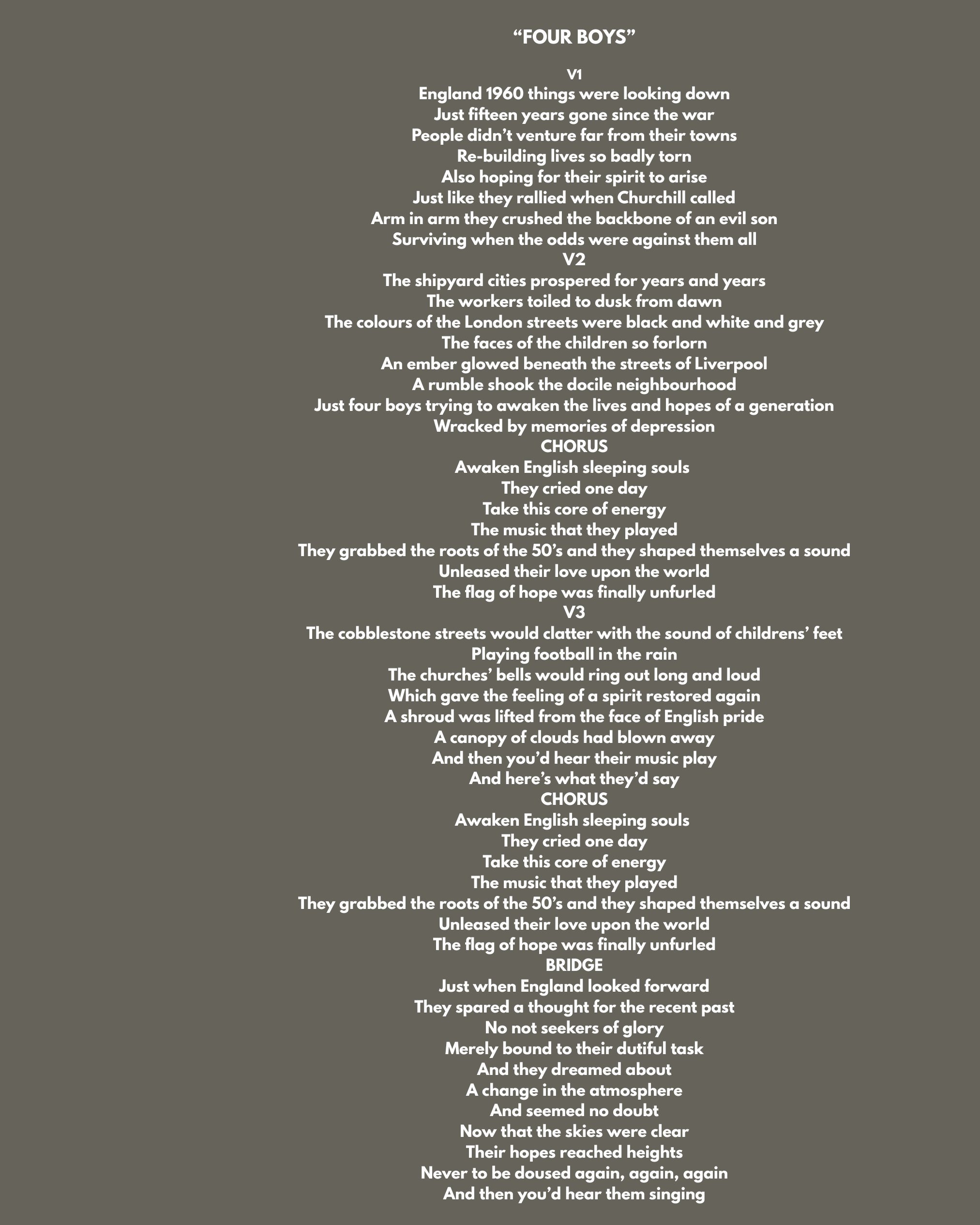
OVERVIEW of “The 909”
The 909 is a full-throttle invitation into the living, breathing world of Beatles fandom — not as history, but as experience.
Anchored by the dual reference to One After 909 and the idea of fans jumping aboard a mythical train, the song reframes devotion as movement: a collective ride through memory, myth, and shared obsession. The call of “All Aboard” isn’t just a lyric — it’s a trigger. Step on, and you’re inside it.
The “world” of the
song
This is not a guided tour. It’s how fans actually think and speak — fast, associative, overflowing.
Locations flash past like stations on a line:
Cavern, Casbah
Hamburg's Indra, Top Ten, Kaiserkeller
Savile Row
Abbey Road
Tittenhurst
Friar Park
Cavendish
Wimpole Street
Each name lands without explanation — because none is needed. Recognition is assumed. The effect is immersion, not narration.
The people on board
The train isn’t just carrying the four — it’s loaded with the full emotional cast:
Astrid, Klaus, Jürgen, Stu, Pete
Mal and Neil, quietly holding it all together
Cynthia, Linda, Pattie, Mo, even Jane and Yoko
Brian Epstein & George Martin guiding
Billy Preston arriving at the perfect moment
They’re not cameos — they’re essential. This is the story fans actually carry.
Songs woven into
memory
Titles and characters pass through like familiar faces:
From Me to You, Eight Days A Week, All You Need Is Love, Penny Lane, All Together Now, Get Back, Come Together, Something, Revolution(ary)
Eleanor, Michelle, Lucy, Rita, Martha
Nothing is flagged. No quotes. Just embedded presence — exactly how they live in the fan mind.
The sound and motion
Musically, The 909 moves like the train it evokes:
Driving rhythm
Jangling guitars
Forward-pushing bass
It leans into early rock and roll energy — momentum over polish.
The guitar solo tips its hat to Carl Perkins, grounding the track in origin without slipping into imitation.
This isn’t retro. It’s propulsion.
The rooftop moment
The emotional peak lands on the rooftop:
Cameras rolling
Crowds gathering
Sound spilling into the street
It’s the point where memory, myth, and reality collapse into one — the moment fans keep returning to.
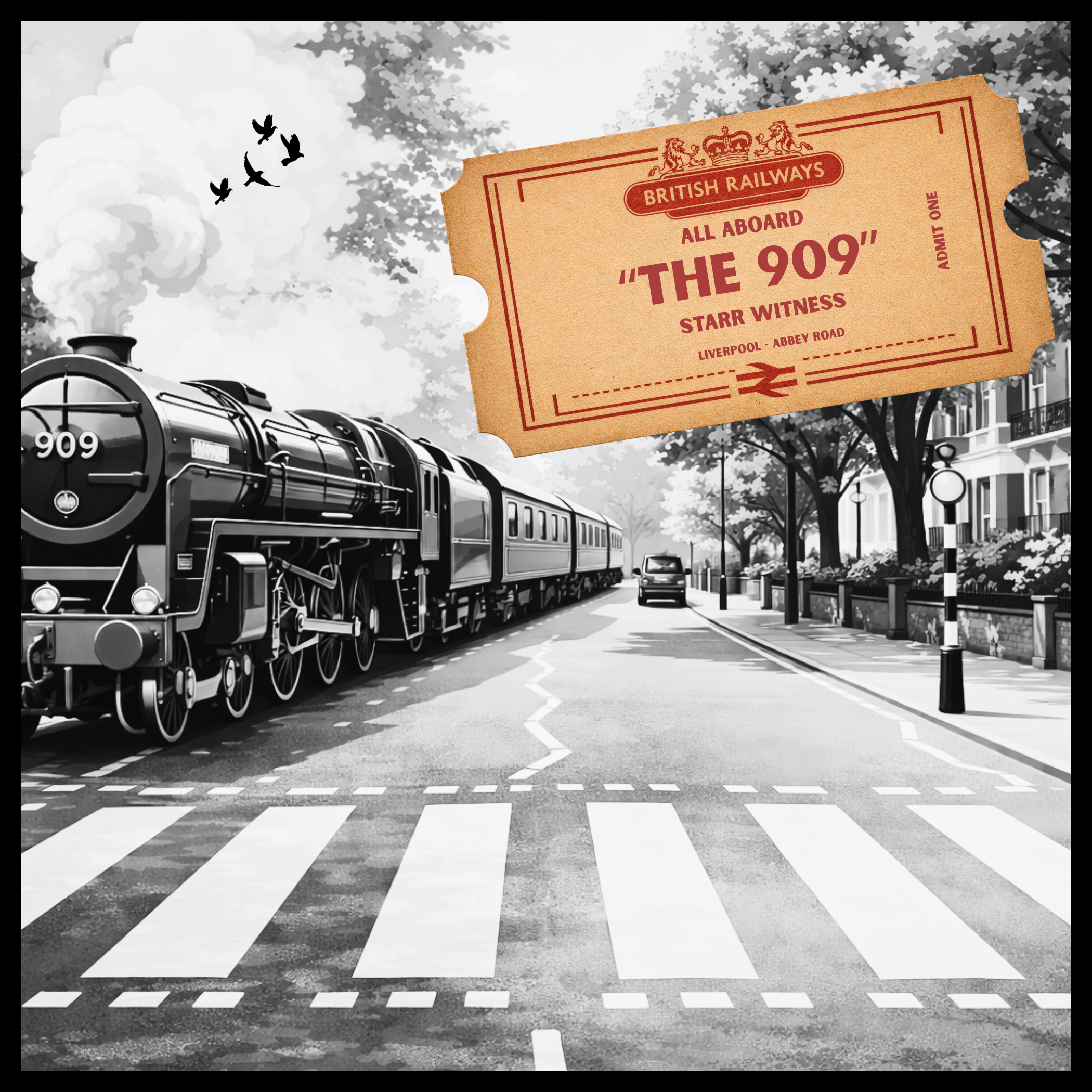
The image and the idea
The visual seals it:
A 1960s British Railways train pulling into Abbey Road
The crossing reimagined as arrival point
A bold ticket stamped across it: “All Aboard — The 909”
It’s not just artwork — it’s the concept made physical.
What it really is
The 909 isn’t a tribute.
It’s a system of belief.
A song about how the Beatles’ story survives —
through repetition, conversation, obsession, and joy.
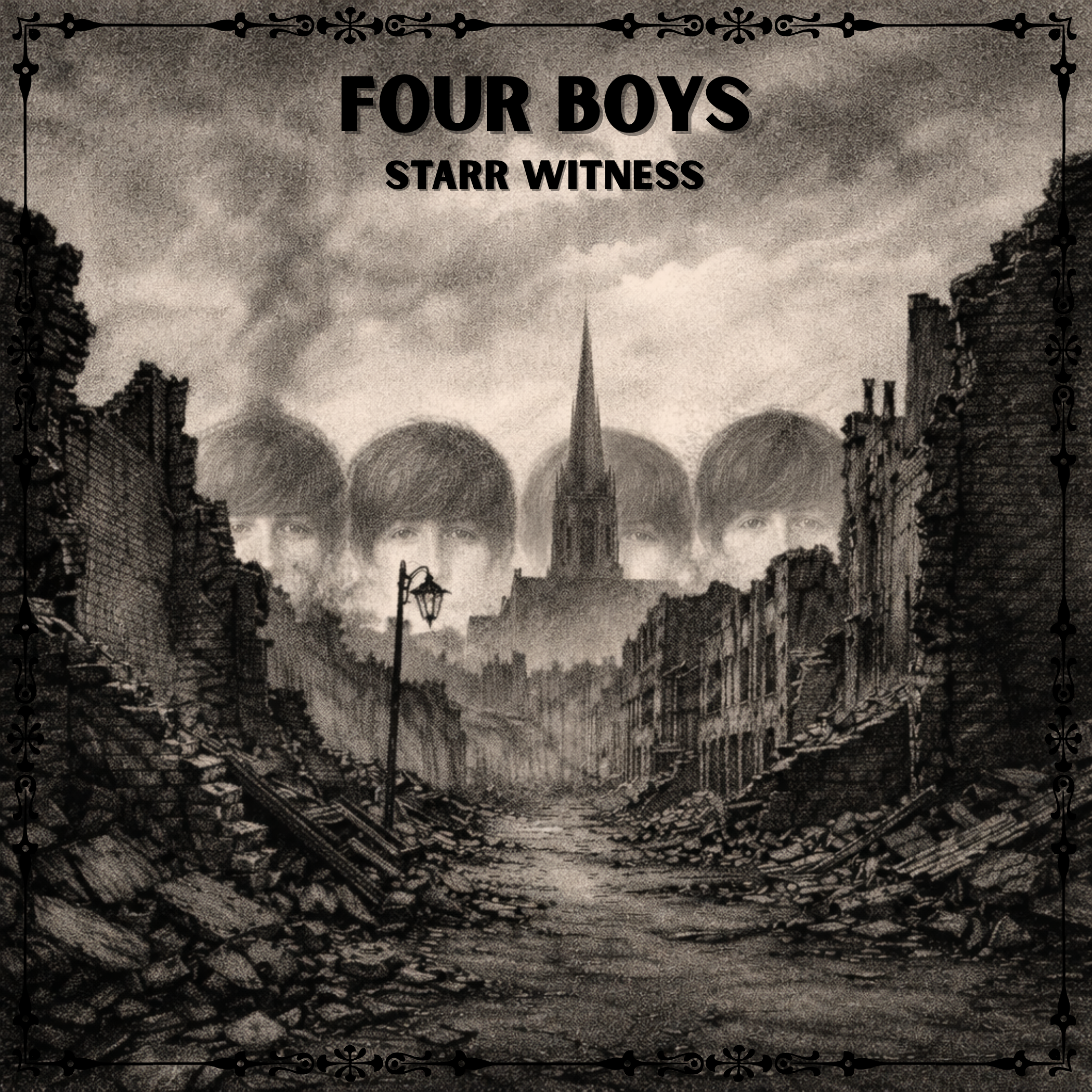
OVERVIEW of “Four Boys”
“Four Boys”is a reflective, almost hymn-like meditation on post-war England and the quiet cultural shock that followed, written from the long view of memory rather than the heat of history. Its tone carries a distinctly English yearning — closer in spirit to “Jerusalem” than to pop biography — invoking landscape, endurance, and spiritual renewal rather than fame or celebrity.
Although the subject is unmistakably rooted in the early 1960s, the song is written by an Australian looking back: a child who, at six, seven, eight years old, experienced the sudden arrival of the Beatles not as icons, but as a feeling — something in the air that changed how the world sounded. The writer completes the circle decades later, around 1990, sitting down deliberately to capture that sensation: not the band, but the impact.
Crucially, the song avoids naming its subject. There is no attempt to commercialise, commemorate, or mythologise. Instead, it behaves like a piece of poetic observation — closer to something written for a school exercise than for radio. The lyrics focus on atmosphere and consequence: bomb-scarred cities, subdued lives, inherited memory, and then a barely explained shift — church bells ringing, clouds lifting, a nation feeling restored without quite knowing why.
The restraint is intentional. Someone in England could hear Four Boys and miss its true subject entirely unless they read closely. Even then, the song doesn’t point — it suggests. It is not trying to be a Beatles song, nor does it chase their sound; the music stands apart, grounded in piano and gradual development. Only the brass lines nod gently to that era, acting less as imitation than as a symbolic flare — a sonic signal of optimism breaking through.
Though written within a pop-song framework, the narrative demands time and space. At over six minutes, the song allows ideas to breathe, accumulate, and resolve naturally. The length isn’t indulgence; it’s necessity. Four Boys isn’t about four famous musicians — it’s about how a generation felt something change, and only much later realised why.